Writers, students, and historians often face the same problem: they need to describe the fall of the Roman Empire, but every draft ends up sounding stiff or repetitive. The sentences blur together. The writing loses its punch. When you vary your sentence structures mixing short declarations with longer, layered explanations you keep readers engaged and make complex history easier to understand. This skill matters whether you're writing a research paper, a blog post, or a creative retelling of one of history's most studied events.
What Does It Mean to Use Varied Sentence Structures When Describing Historical Events?
Sentence structure variety means changing how you build your sentences. Some are short and direct. Others stretch longer, weaving in causes, context, and consequences. A few might start with a dependent clause. Others open with a bold subject-verb combination. When describing something as layered as the fall of the Roman Empire, this approach prevents your writing from becoming monotonous and helps you capture the complexity of the event itself.
Consider the difference between these two passages about the same moment in history:
Without variety: "The Roman Empire faced economic decline. The Roman Empire suffered military defeats. The Roman Empire experienced political instability. The Roman Empire fell in 476 AD."
With variety: "By the fifth century, the Roman Empire was buckling under economic decline, military defeats, and constant political turmoil. Barbarian tribes pressed at every frontier. Leadership changed hands so frequently that stability became impossible. In 476 AD, when the Germanic chieftain Odoacer deposed the last Western Roman Emperor, Romulus Augustulus, the empire that had lasted centuries finally collapsed."
The second version tells the same story. But it reads like something a person actually wrote not a bullet-point list stretched into paragraphs.
Why Does This Matter for the Fall of the Roman Empire Specifically?
The fall of the Roman Empire isn't a single event. It's a process that unfolded over centuries, involving military, economic, social, and political forces all at once. Describing it well requires you to juggle multiple causes and timelines. If your sentences all follow the same pattern subject, verb, object, repeat you'll flatten a story that deserves depth.
Historians like Edward Gibbon spent volumes exploring why Rome collapsed, and even they needed varied prose to hold a reader's attention through hundreds of pages. Your writing doesn't need to be that long, but it does need the same structural flexibility.
When Do Writers Need This Skill?
You'll find this skill useful in several situations:
- Academic essays Professors notice when every sentence follows the same mold. Varied structures show stronger thinking and better command of the material.
- Blog posts and articles Online readers skim quickly. Changing sentence length and structure creates rhythm that pulls them through the text.
- Creative nonfiction If you're retelling historical events in a narrative style, monotone sentences kill the drama.
- Exam responses Even in timed writing, a mix of simple and complex sentences demonstrates stronger historical reasoning.
This same principle applies beyond Rome. If you've practiced rewriting a historical event in multiple styles, you already know how structure shapes meaning.
What Are Practical Examples of Varied Structures for This Topic?
Here are several ways to describe key moments from the fall of the Roman Empire, each using a different sentence structure:
Simple and Direct
"Rome fell because it could no longer defend its borders."
Compound Structure
"Economic troubles drained the treasury, and military losses weakened the legions, leaving the empire vulnerable to outside invasion."
Complex with a Dependent Clause
"Although the Eastern Roman Empire survived for nearly another thousand years, the Western half crumbled under the weight of invasions, corruption, and administrative collapse."
Opening with a Participial Phrase
"Facing relentless pressure from Visigoths, Vandals, and Huns, the Western Roman Empire lost territory year after year until almost nothing remained."
Rhetorical Question Followed by an Answer
"How does the greatest empire in the ancient world simply disappear? Gradually, then all at once through decades of mismanagement, economic strain, and military overextension that left Rome unable to recover."
Short Punchy Fragment for Emphasis
"Barbarian generals now commanded Rome's armies. Former enemies became rulers. The old order was gone."
Each of these approaches works. The key is mixing them. If you're struggling with how to rephrase historical summaries for different tones, studying how to rephrase a World War II event summary for academic writing can help you see these principles in action across different historical periods.
What Common Mistakes Do Writers Make?
- Starting every sentence the same way. "The Roman Empire..." repeated five times in a row is the most frequent problem. Vary your subjects. Use pronouns. Start with time markers or prepositional phrases instead.
- Overloading a single sentence. Some writers try to cram every cause of Rome's fall into one enormous sentence. That creates confusion, not depth. Split complex ideas across multiple sentences.
- Ignoring sentence length variety. If every sentence runs 25 to 30 words, your writing feels like a wall of text. Throw in a five-word sentence. Then follow it with something longer. The contrast creates rhythm.
- Using passive voice too often. "The empire was weakened by..." repeated throughout a paragraph drains energy from the writing. Mix in active constructions: "Germanic tribes weakened the empire through repeated raids."
- Confusing variety with chaos. Switching structures should serve clarity, not decoration. Every sentence still needs to connect logically to the one before it.
How Can You Practice This Skill?
Start with a single fact about the fall of the Roman Empire. Something simple, like: "The Western Roman Empire fell in 476 AD." Now rewrite that fact five different ways:
- As a question: "Did the Western Roman Empire truly fall in 476 AD, or had it been collapsing for decades?"
- As a cause-and-effect statement: "Centuries of internal decay and external pressure culminated in 476 AD, when the last Western emperor was overthrown."
- As a contrast: "While the Eastern Roman Empire flourished, the Western half disintegrated, meeting its symbolic end in 476 AD."
- As a fragment followed by a full sentence: "476 AD. The year the Western Roman Empire officially ceased to exist."
- As a timeline entry: "By 476 AD, the Western Roman Empire had lost nearly all its territory to Germanic kingdoms, and its final emperor, a teenager named Romulus Augustulus, was removed from power without a fight."
This exercise works for any historical event. You can apply the same approach when you explore different ways to summarize the French Revolution or any other topic that requires precision and variety.
What Specific Causes of Rome's Fall Lend Themselves to Different Structures?
Not every cause of the empire's collapse needs the same sentence treatment. Match your structure to the type of information:
- Military defeats These work well in short, punchy sentences that mirror the urgency of battle. "Rome lost. Again and again."
- Economic decline Longer, explanatory sentences suit this topic because the causes were gradual and interconnected. You need room to show how inflation, taxation, and trade disruption fed each other.
- Political instability Lists and parallel structures help here because the pattern of coups, assassinations, and civil wars benefits from repetition with variation. "One emperor was murdered. The next lasted six months. The one after that was never recognized by the Senate."
- Barbarian invasions Action-oriented, active-voice sentences convey the violence and momentum of these migrations. "The Visigoths sacked Rome in 410 AD. The Vandals did it again in 455 AD."
- Social and cultural shifts Complex sentences with dependent clauses work for these broader, more abstract changes, since they require context and qualification.
What Should You Do Next?
Pick a paragraph you've already written about the fall of the Roman Empire or any historical event. Read it aloud. Listen for repetition in how your sentences begin, how long they run, and what rhythm they create. Then rewrite it with at least three different structure types mixed in.
Quick checklist before you publish or submit:
- ✅ No more than two sentences in a row start the same way
- ✅ At least one sentence is under eight words
- ✅ At least one sentence uses a dependent clause or introductory phrase
- ✅ Active voice appears at least as often as passive voice
- ✅ The paragraph has a natural rhythm when read aloud short, long, medium, short
- ✅ Every sentence earns its place by adding new information or a new angle
- ✅ The cause-and-effect chain of Rome's decline remains logically clear despite the structural variety
Structure variety isn't decoration. It's how you make a 1,500-year-old story feel alive to a reader who might otherwise scroll past it.
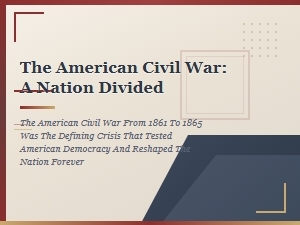 American Civil War Event Overview: Short and Long Sentence Versions
 Rephrasing World War Ii Event Summaries for Academic Writing
 Event Summary Variations: Rewriting History in Multiple Sentence Styles
 One-Sentence Summaries of the French Revolution
 Varying Sentence Structure in Historical Event Writing
 Narrative Voice Techniques for Retelling Historical Moments