Reading a history essay where every sentence follows the same pattern feels like driving down a flat, endless highway. Your eyes glaze over. Your mind drifts. The facts might be accurate, but nothing holds your attention. That's what happens when writers forget to vary their sentence structure and in historical writing, where the material is already dense, it can be the difference between a reader finishing your piece or abandoning it halfway through. Learning how to vary sentence structure when writing about historical events doesn't just make your work more readable. It makes your arguments more persuasive, your narratives more engaging, and your credibility as a writer more obvious.
What does varying sentence structure actually mean in historical writing?
Sentence structure variation means deliberately changing the way you build your sentences from one to the next. It involves mixing short declarations with longer, more complex constructions. It means starting some sentences with subjects, others with time markers, and others with dependent clauses. It's the practice of avoiding repetition in rhythm so your writing sounds natural rather than mechanical.
In historical writing specifically, this matters because the subject matter already carries a risk of monotony. You're often listing dates, describing sequences of events, or explaining cause and effect. If every sentence begins with "The [noun] [verb]..." your writing quickly becomes predictable. Sentence variety gives your historical narrative patterns the texture they need to keep a reader invested.
Why does a repetitive sentence pattern weaken your history writing?
When every sentence follows the same mold, readers stop paying attention to individual ideas. The information blends together. A sentence about the fall of Constantinople in 1453 reads with the same weight as a sentence about minor trade disputes because both are packaged identically.
Repetitive structure also signals to your reader (and to any editor or instructor reviewing your work) that you're not fully in control of your prose. It suggests you're listing facts rather than interpreting them. Historical writing at its best does more than report it balances description with analysis, and varied sentence patterns are one of the simplest ways to achieve that balance.
What are the most effective ways to change up your sentence structure?
1. Alternate between short and long sentences
This is the most direct technique, and it works every time. A long sentence can set context, layer details, and build toward a point. Then a short sentence lands that point with force.
Example:
By the summer of 1914, a web of military alliances, nationalist tensions, and imperial ambitions had pulled nearly every major European power toward the brink of war. One bullet changed everything.
The first sentence builds. The second one hits. That rhythm keeps readers locked in.
2. Change your sentence openers
If you notice that most of your sentences start with the subject a person, place, or institution try beginning some with:
- Time markers: In 1789, tensions in Paris reached a breaking point.
- Prepositional phrases: Across the colonies, resentment toward British taxation had been growing for years.
- Dependent clauses: Although the treaty was signed in 1919, its effects would echo for decades.
- Participial phrases: Faced with mounting opposition, the emperor agreed to abdicate.
This small shift makes a noticeable difference. Your writing immediately feels less formulaic.
3. Switch between active and passive voice on purpose
Most style guides tell you to favor active voice, and that's good general advice. But in historical writing, passive voice has legitimate uses. When the action matters more than the actor or when the actor is unknown passive construction is practical.
Active: Napoleon ordered the invasion of Russia in 1812.
Passive: The city was besieged for three brutal months before it surrendered.
Mixing both gives you more tools. The key is not to default to passive voice out of habit use it with intention.
4. Use rhetorical questions and controlled fragments
Questions pull readers into your argument. They create a brief moment of engagement where the reader's brain actively participates.
Why did the Roman Empire fall? Historians have debated this for centuries, offering explanations that range from military overextension to economic collapse to sheer political dysfunction.
Occasional sentence fragments used sparingly can also create emphasis. The revolution had begun. Not in the halls of parliament, but in the streets. This works in narrative and persuasive historical writing, but it should be intentional, not accidental.
5. Rearrange your syntax
English typically follows a subject-verb-object order. But you can shift elements around for effect:
- Standard: The Allies won the war because of superior industrial capacity.
- Inverted: Because of superior industrial capacity, the Allies won the war.
Both are grammatically correct. But placing the cause before the result changes the emphasis. Using this technique across a paragraph prevents the dreaded "subject-verb-object, subject-verb-object" pattern.
What does this look like in a full paragraph?
Here's a before-and-after comparison.
Before (repetitive structure):
The French Revolution began in 1789. The people of Paris stormed the Bastille on July 14. The storming of the Bastille became a symbol of the revolution. The revolution spread across France rapidly. The monarchy collapsed within three years.
After (varied structure):
In the summer of 1789, France was on the edge of collapse. Years of fiscal mismanagement, bread shortages, and aristocratic indifference had pushed ordinary citizens to a breaking point. On July 14, a crowd stormed the Bastille a fortress that had come to symbolize royal tyranny. The act was violent, desperate, and deeply symbolic. Within three years, the monarchy would cease to exist entirely.
Same facts. Completely different reading experience. The second version uses varied openers, different sentence lengths, and a mix of simple and complex constructions. It reads like a story instead of a bulleted list disguised as prose.
What common mistakes do writers make when trying to vary sentences?
Overcorrecting with overly complex sentences. Some writers, once they realize their sentences are too uniform, start cramming every clause and qualifier into single sentences. This creates the opposite problem sentences that are dense, tangled, and exhausting. Variation means variety, not complexity for its own sake.
Using fragments incorrectly. Fragments can be powerful. But if every other sentence is a fragment, it reads as careless rather than stylistic. Use them like seasoning, not like a main ingredient.
Forcing variation where it isn't needed. Not every paragraph needs to be a showcase of syntactic range. Some historical information is best delivered in clear, direct sentences. If you're explaining a straightforward cause-and-effect sequence, simple structure might serve you better than elaborate ones.
Ignoring paragraph-level rhythm. Sentence variety isn't just about individual sentences it's about how sentences relate to each other within a paragraph. If every paragraph starts with a long sentence followed by a short one, that pattern itself becomes repetitive. Think about rhythm at both the sentence and paragraph level.
How can you practice and improve at this?
Start by reading your own writing out loud. Your ear will catch repetitive patterns faster than your eyes will. If you notice yourself falling into a rhythm boom, boom, boom that's your signal to break the pattern.
Next, study writers who do this well. Read narrative history by authors like David McCullough or Antony Beevor and pay attention to how they structure their sentences. You'll notice they rarely let more than two or three sentences follow the same construction in a row.
You can also take a paragraph you've already written and rewrite it three different ways each time using a different dominant sentence pattern. This exercise trains you to see structure as a choice rather than a default.
For academic writers working on longer papers, persuasive narrative sentence patterns offer additional frameworks for structuring arguments that keep readers engaged across multiple pages.
Quick checklist: Is your historical writing varied enough?
Use this checklist the next time you review a draft:
- Sentence length: Do you have a mix of short (under 10 words), medium, and long sentences?
- Sentence openers: Have you started sentences with different structures subjects, time markers, prepositional phrases, clauses?
- Voice: Are you using both active and passive voice where each serves a purpose?
- Rhythm: If you read the paragraph aloud, does it sound natural, or does it have an obvious, repetitive beat?
- Emphasis: Are your most important points landing in short, direct sentences rather than getting buried in long ones?
- Questions or fragments: Have you used one or two rhetorical questions or well-placed fragments for effect?
- Paragraph starts: Do your paragraphs open differently from one another, or do they all follow the same pattern?
Go through your current draft paragraph by paragraph. Highlight the first three words of each sentence. If you see the same pattern repeating four or more times, rewrite two of those sentences with different openings. That single change alone will make your historical writing noticeably stronger.
 Narrative Voice Techniques for Retelling Historical Moments
 Persuasive Historical Narrative Sentence Patterns for Academic Writers
 Sentence Variation Strategies for Middle School History Essays
 Descriptive vs Analytical Sentences in History Writing Examples
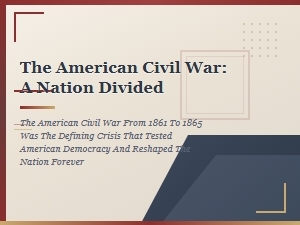 American Civil War Event Overview: Short and Long Sentence Versions
 Describing the Fall of the Roman Empire Using Varied Sentence Structures