History doesn't have to read like a textbook. When you descriptively rewrite historical events, you turn dates and facts into stories people actually want to read. This skill matters for writers, teachers, content creators, and anyone who needs to present the past in a way that connects with a modern audience. The difference between a dry retelling and a vivid one often comes down to a few specific techniques and learning them is more straightforward than you might think.
What does it mean to descriptively rewrite a historical event?
Descriptive rewriting of historical events means taking a factual account a battle, a political turning point, a cultural movement and restating it with sensory detail, stronger verbs, varied sentence structure, and narrative pacing. You're not inventing facts. You're presenting the same information in a way that helps the reader see and feel what happened rather than just skim a summary.
For example, instead of writing:
"The soldiers crossed the river on December 25, 1776."
You might write:
"On Christmas night, 1776, soldiers waded through chunks of floating ice in the Delaware River, their boots soaked and their hands numb around frozen muskets."
Same event. Same facts. But the second version puts the reader in the scene. That's descriptive rewriting in action.
Why would someone need to rewrite history this way?
There are several real situations where this skill is useful:
- Bloggers and content creators who cover historical topics and want their articles to hold a reader's attention past the first paragraph.
- Teachers looking for ways to make lesson plans more engaging for students who zone out during standard textbook readings.
- Fiction writers who build stories around real events and need historically grounded but vivid scenes.
- Museum and archive professionals writing exhibit descriptions or educational materials.
- Nonfiction authors who want their historical narratives to read more like stories than reports.
In each of these cases, the goal is the same: keep the accuracy, lose the flatness.
How do you rewrite a historical event descriptively without changing the facts?
This is the core challenge. Accuracy matters especially when you're dealing with real events that affected real people. Here's a step-by-step approach that keeps the facts intact while improving the writing:
- Start with the primary source. Letters, diaries, newspaper accounts, and official records often contain vivid details that textbooks leave out. Use those details as your raw material.
- Identify the sensory moments. What did people see, hear, smell, or feel? A crowd's roar, the smell of gunpowder, the cold of a prison cell these details do the heavy lifting in descriptive writing.
- Choose stronger verbs. Replace "went" with "marched" or "fled." Replace "said" with "demanded" or "whispered." Small verb changes shift the energy of an entire sentence.
- Vary your sentence length. Long sentences build atmosphere. Short sentences create urgency. Mixing them keeps the reader alert. You can find targeted drills for this in sentence variation exercises built for historical rewriting.
- Use the specific over the general. "Many people died" is vague. "Over 6,000 men fell within nine hours" is specific. Specific numbers and names give weight to your writing.
- Ground the reader in time and place. Don't just name the date. Describe the season, the weather, the setting. "A humid July morning in Gettysburg" tells more than "July 1, 1863."
What does a good descriptively rewritten passage look like?
Compare these two versions of the same event the sinking of the Titanic:
Standard version:
"On April 15, 1912, the Titanic sank after hitting an iceberg. About 1,500 people died."
Descriptive version:
"Just before midnight on April 14, 1912, a lookout spotted something dark in the water ahead. Within seconds, the Titanic's hull scraped against an iceberg that towered above the lower decks. By 2:20 a.m., the ship had broken apart and slipped beneath the North Atlantic. Roughly 1,500 passengers and crew many still in their nightclothes never made it to a lifeboat."
The descriptive version uses the same facts. But it adds timing, physical detail, and a human element. The reader doesn't just learn what happened they picture it.
For more examples and techniques like this, our breakdown of vivid rewriting techniques for historical narratives walks through several real events rewritten this way.
What are the most common mistakes people make?
When people first try descriptive rewriting, they tend to fall into the same traps:
- Adding fictional details. Descriptive doesn't mean invented. If you don't know what a soldier's coat looked like, don't make it up find a source or describe what you can confirm.
- Overwriting. Piling on adjectives doesn't equal good description. "The tall, dark, looming, terrifying tower" is weaker than "the tower blocked out the sky." One precise image beats five vague ones.
- Losing the timeline. When you get absorbed in atmosphere, it's easy to muddle the sequence of events. Readers still need to know what happened and in what order.
- Ignoring audience. A rewritten passage for middle schoolers should sound different from one written for history buffs. Tone and vocabulary need to match who's reading.
- Forgetting the stakes. Historical events had real consequences. If you rewrite a revolution like a movie scene without conveying what people risked, you'll lose the gravity of the event.
How can teachers use this in the classroom?
Descriptive rewriting works well as an assignment because it asks students to do two things at once: research accurately and write creatively. A student who rewrites the signing of the Declaration of Independence with sensory detail has to understand the event first. They can't describe a room they haven't imagined.
Teachers can start with short exercises rewriting a single paragraph from a textbook before assigning longer narrative pieces. Peer review also helps: students read each other's versions and spot where details are missing or overdone. For a fuller approach to classroom use, we put together a guide on teaching descriptive rewriting with historical events.
Does this approach work for all historical periods?
It works best when there are primary sources available personal accounts, photographs, archaeological findings, or oral histories. Ancient events with limited records can be harder to rewrite descriptively, since there's less confirmed detail to draw from. But even well-documented events from the 20th century require care. Just because a source is detailed doesn't mean it's unbiased. Cross-referencing accounts from different perspectives gives your rewrite more depth and accuracy.
For reference on how historians evaluate sources, the U.S. National Archives education resources offer solid guidance on working with primary documents responsibly.
Quick checklist before you publish a descriptive rewrite
- ✅ Every factual claim traces back to a reliable source.
- ✅ You've included at least one sensory detail (sight, sound, smell, touch, taste).
- ✅ You've used specific names, dates, and numbers where available.
- ✅ Verbs are active and precise no filler words like "really" or "very."
- ✅ Sentence lengths vary between short and long.
- ✅ The sequence of events is clear and logical.
- ✅ The tone fits your target audience.
- ✅ You haven't added fictional details disguised as facts.
- ✅ Someone unfamiliar with the event could follow the narrative without outside context.
Start with one event you already know well. Rewrite a single page. Read it out loud. If it sounds like something you'd want to keep reading, you're on the right track.
 Descriptive Historical Event Sentences for Inspiration and Creative Rewriting
 Historical Event Sentence Variation Exercises for Descriptive Rewriting Practice
 Vivid Rewriting Techniques for Historical Narratives
 Teaching Descriptive Rewriting with Historical Events: a Guide for Educators
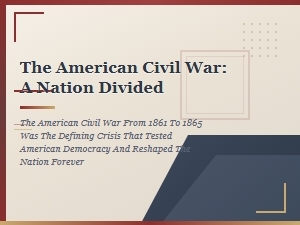 American Civil War Event Overview: Short and Long Sentence Versions
 Describing the Fall of the Roman Empire Using Varied Sentence Structures