Most students read about historical events and forget them within weeks. The dates blur. The names fade. The significance evaporates. But when students rewrite those same events using vivid, descriptive language, something shifts they start seeing history as something that happened to real people in real places. Teaching descriptive rewriting with historical events for educators is one of the most effective ways to build writing skills and deepen historical understanding at the same time. This article walks you through how to do it well, what to watch out for, and where to go next.
What does descriptive rewriting with historical events actually mean?
It's a writing exercise where students take a factual account of a historical event a textbook passage, a primary source, a short summary and rewrite it using sensory details, precise verbs, and descriptive language. The facts stay the same. The writing changes. Instead of "The army crossed the river," a student might write, "Thousands of soldiers waded through freezing, waist-deep water before dawn, their boots heavy with mud."
The goal is not fiction. Students aren't inventing what happened. They're using descriptive writing techniques to make what already happened feel real and immediate to the reader. This is sometimes called vivid historical rewriting or descriptive event rewriting, and it sits at the intersection of literacy instruction and history education.
Why does this approach work better than traditional history writing?
Standard history writing in schools tends to be flat. Students summarize events, list causes and effects, and move on. There's nothing wrong with that summary skills matter. But descriptive rewriting asks students to think more carefully about how things looked, sounded, and felt. That kind of thinking builds deeper comprehension.
Research on writing-to-learn strategies shows that when students manipulate and rephrase information in their own words especially in ways that require elaboration they retain more. A meta-analysis published in Educational Psychologist found that writing activities emphasizing personal engagement with content led to stronger learning outcomes than simple note-taking or summarizing.
Descriptive rewriting also builds transferable writing skills. Students practice using concrete nouns, active verbs, figurative language, and sentence variety all of which strengthen their writing across subjects.
How do you introduce descriptive rewriting to students?
Start with a short, dry passage. A textbook paragraph about the sinking of the Titanic, the signing of the Declaration of Independence, or the march from Selma to Montgomery. Keep it to three or four sentences. The blander the original, the more dramatic the contrast when students rewrite it.
Read the passage aloud together. Then ask your students: What's missing here? What would you see if you were standing on that bridge, in that room, on that road? Let them brainstorm sensory details not to add to the passage yet, just to imagine the scene.
From there, you can guide students through a structured rewriting process. For a step-by-step approach, see our guide on how to descriptively rewrite historical events, which breaks the process into manageable stages.
What does a strong student example look like?
Consider a student rewriting a passage about the Wright brothers' first flight at Kitty Hawk in 1903.
Original textbook version:
"On December 17, 1903, Orville Wright made the first successful airplane flight at Kitty Hawk, North Carolina. The flight lasted 12 seconds and covered 120 feet."
Student's descriptive rewrite:
"A cold December wind cut across the sand dunes at Kitty Hawk. Orville Wright lay flat on the wing of the wooden glider, his hands gripping the controls. The engine sputtered to life with a sharp, rattling roar. Then the craft lifted unsteady, barely above the sand and for twelve seconds it hung in the air before dropping back to earth. It only traveled 120 feet. But those twelve seconds changed everything."
The facts haven't changed. The writing now includes temperature, sound, physical sensation, and pacing. The student had to research what Kitty Hawk looked like, understand the mechanics of the flight, and make choices about which details to include. That's active learning.
You can find more vivid rewriting techniques for historical narratives that show students how to layer sensory detail without drifting into inaccuracy.
What mistakes should you watch for?
There are a few common pitfalls when teaching this skill:
- Fabricating facts. Students sometimes invent details to make their writing more exciting. A soldier didn't "cry out in agony" unless a source says he did. Emphasize that descriptive rewriting is grounded in evidence. If students want to describe a battle scene's sounds, they can reference accounts from soldiers' letters or historical descriptions of similar conditions but they can't make things up and call them facts.
- Overloading on adjectives. Some students think descriptive writing means stacking modifiers. "The big, tall, imposing, massive, ancient castle" isn't descriptive it's cluttered. Teach students that one precise adjective beats four vague ones.
- Losing the timeline. When students get absorbed in description, they sometimes lose track of the event's sequence. Make sure they still communicate what happened, when, and in what order.
- Writing like a textbook anyway. Some students default to formal, academic tone even when you ask for vivid language. Sentence variation exercises can help break that habit. We've put together a set of historical event sentence variation exercises that give students structured practice with rhythm and structure.
How do you assess descriptive rewriting without killing creativity?
Rubrics help, but keep them simple. Focus on three or four things:
- Accuracy. Did the student keep the historical facts intact?
- Sensory detail. Does the rewrite include specific, concrete details that help the reader picture the scene?
- Sentence variety. Does the writing mix short and long sentences, vary its structure, and maintain a natural rhythm?
- Word choice. Are the verbs active? Are the nouns specific? Does the language feel intentional rather than generic?
Don't grade for "how exciting" the piece is. Some historical events are quiet and somber, and a student who writes a restrained, precise description of a treaty signing may be doing stronger work than one who dramatizes a battle with exaggerated language.
When in the school year does this fit best?
Descriptive rewriting works at almost any point, but a few moments are especially good:
- Early in a unit, as a hook activity to build interest in a new historical period.
- Mid-unit, when students have enough background knowledge to add meaningful detail.
- As a review tool, where students rewrite an event from earlier in the term to reinforce what they learned.
- During writing workshop time, as a low-stakes practice exercise that builds style and voice.
It pairs well with primary source analysis. If students have already read a letter, diary entry, or newspaper account, they can draw on those sources to add authentic texture to their rewrites.
How do you differentiate for different skill levels?
For struggling writers, provide a sentence frame or a word bank of strong verbs and sensory vocabulary. Let them rewrite just two sentences instead of a full paragraph. The goal is to build confidence before increasing complexity.
For advanced students, raise the stakes. Ask them to rewrite the same event from two different perspectives a soldier and a general, a passenger and a crew member. Or ask them to research additional primary sources and weave those details into their rewrite. This pushes them toward analytical thinking alongside creative writing.
What's a practical next step for tomorrow's class?
Here's a quick-start checklist you can use right away:
- Pick a short historical passage three to five sentences from a textbook or encyclopedia entry.
- Read it aloud and ask students what's missing what would they see, hear, smell, or feel if they were there?
- Give students 15 minutes to rewrite the passage using at least three sensory details and two strong verbs.
- Have students pair up and trade rewrites. Ask each partner to underline the sentence that creates the strongest mental image.
- Discuss as a class which details were accurate, which added real depth, and which might have crossed the line into invention.
- Save the best rewrites and use them as mentor texts for the next round.
Start with one event. Keep the expectations clear. Once students see the difference between a flat summary and a vivid rewrite especially their own they'll want to do it again.
 How to Descriptively Rewrite Historical Events with Vivid Detail
 Descriptive Historical Event Sentences for Inspiration and Creative Rewriting
 Historical Event Sentence Variation Exercises for Descriptive Rewriting Practice
 Vivid Rewriting Techniques for Historical Narratives
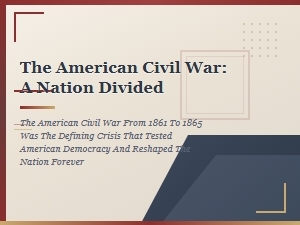 American Civil War Event Overview: Short and Long Sentence Versions
 Describing the Fall of the Roman Empire Using Varied Sentence Structures